

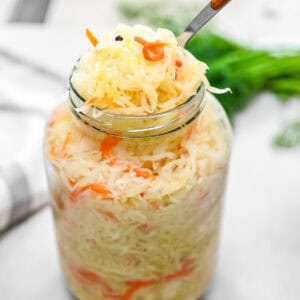
This Crunchy Homemade Sauerkraut is crisp, vibrant, and so refreshingly simple. Sweet carrots and tender cabbage ferment into the perfect tangy, probiotic-rich crunch that instantly elevates everyday meals.
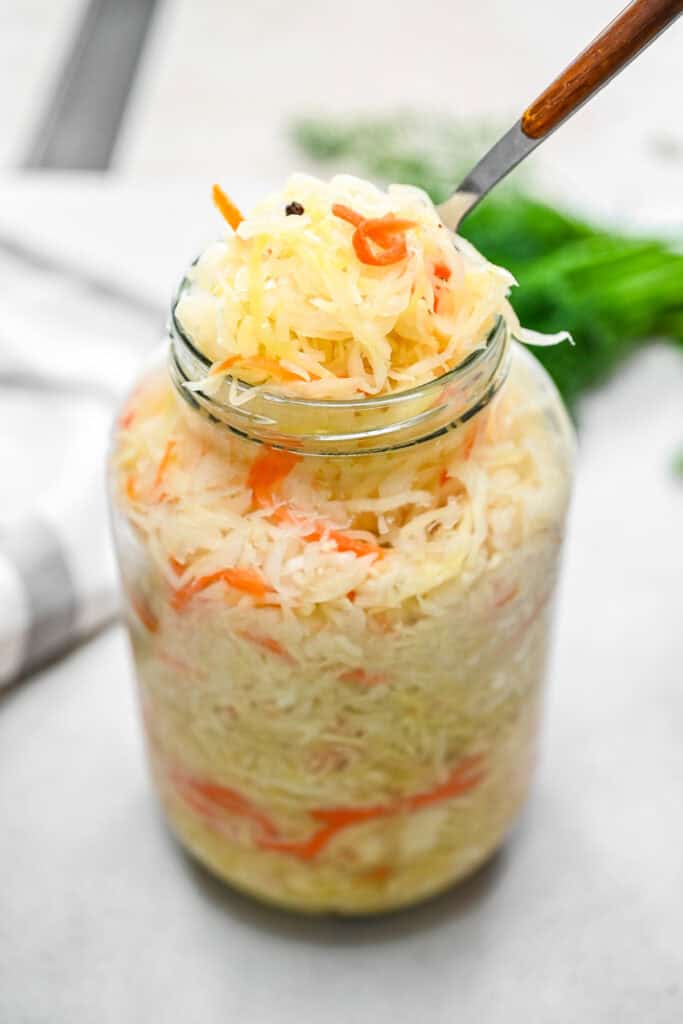
If typical American grocery shoppers saw the sheer volume of sauerkraut my grandma and great-grandma used to ferment for the winter back in Ukraine, their jaws would genuinely drop. We’re talking massive wooden barrels, mountains of shredded cabbage, and enough probiotic power to fuel an entire village through freezing months. Our grandmothers definitely held the ultimate gut-health secrets long before "probiotics" became a trendy wellness buzzword, and to this day, I simply cannot imagine my kitchen without a steady supply of this crisp, tangy staple.
But don’t worry, I won’t make you hunt down a 50-gallon wooden vat. Today, we’re keeping things deliciously approachable with just one simple glass jar right on your kitchen counter. Fair warning, though: once you experience that loud, insanely satisfying homemade crunch, one jar will never feel like enough again.
▶️ Video Tutorial
❤️ Why You’ll Love This Crunchy Homemade Sauerkraut
🚫 Zero fancy equipment
Forget about buying specialized fermentation crocks, glass weights, or tricky airlock lids. A regular everyday glass jar and a simple wooden skewer are all you need to get professional results right on your counter.
🔊 That insanely loud crunch
Say goodbye to the limp, soggy mush you find in vinegar-heavy grocery cans. Coarsely grating the carrots and salting the cabbage just right keeps every bite snappy, vibrant, and bursting with fresh juices.
⏱️ 15-minute hands-on prep
No boiling water, no hot stoves, and zero complicated culinary techniques. You just shred the veggies, massage with salt until the juices flow, pack the jar, and walk away while nature does the heavy lifting.
🌱 Pure, live probiotic goodness
Because it is raw and naturally wild-fermented, it skips the harsh pasteurization and artificial preservatives that kill off beneficial bacteria. It’s a genuine, living superfood that actively supports your gut with every single forkful.
🧺 Ingredients for Crunchy Homemade Sauerkraut
For 1-Quart / 1-Liter Jar:
- 🥬 Late-season green cabbage – 2.2 lbs (1 kg), thinly shredded (about 8–9 packed cups). Choose a dense, heavy head of cabbage. Shred it thinly, but not too fine. This helps it keep that signature crunch.
- 🥕 Carrot – 1 small (about 1.7 oz / 50 g), shredded with a julienne grater. Do not use more than 50 grams. This amount gives great color without making the brine sweet. A julienne grater keeps the matchsticks crisp. They will not get mushy during fermentation.
- 🧂 Coarse rock salt / pickling salt (non-iodized) – 1 tbsp level (20 g / 0.7 oz, non-iodized). Always use pure, additive-free salt. Avoid iodine or anti-caking agents. They can make the brine cloudy and soften the vegetables.
- 🍃 Bay leaves (optional) – 1–2 small leaves
- 🖤 Whole black peppercorns (optional) – 4–5 peppercorns
⚖️ The 2% Salt Golden Ratio for Crunch
The most important rule for crunchy sauerkraut is the 2% salt ratio. Specifically, use exactly 20 grams of salt per 1 kilogram (2.2 lbs) of cabbage. This precise amount is the sweet spot. In fact, it pulls out plenty of natural juice and keeps harmful bacteria away. Most importantly, it guarantees an addictive crunch every time. Exactly 1 kg of shredded cabbage packs snugly into a standard 1-liter (1-quart) jar!
📋 How to Make Crunchy Homemade Sauerkraut
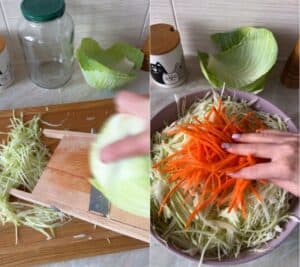
1. Prep the cabbage and carrot. Remove and discard the tough green outer leaves. Stop once you reach the clean, pale leaves underneath. Cut the cabbage into quarters and slice out the thick core. Next, shred the leaves thinly using a sharp chef's knife or mandoline. Aim for thin ribbons with a firm bite. For the carrot, use a julienne grater for sturdy matchsticks, or use a coarse box grater.
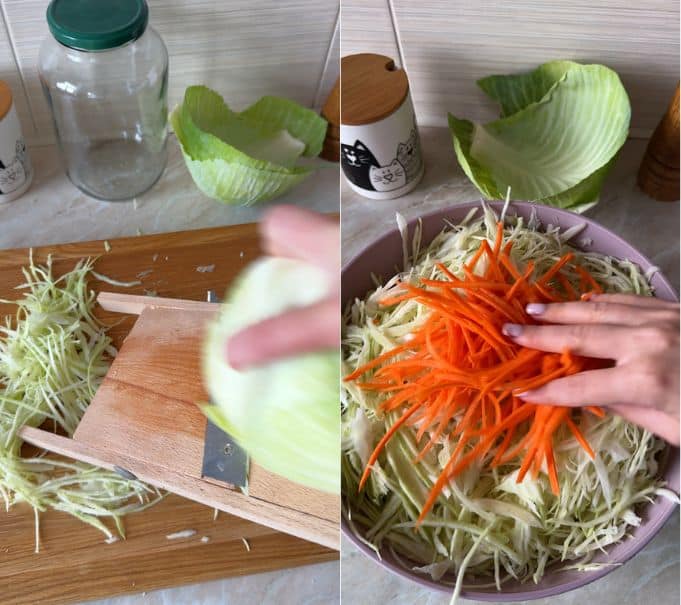
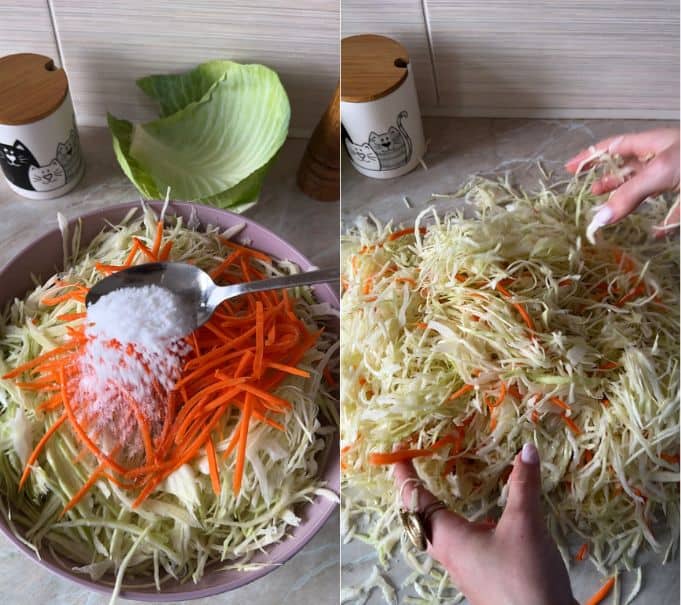
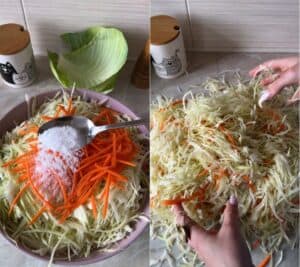
2. Salt and gently toss. Place the shredded cabbage and grated carrot into a large mixing bowl. Sprinkle the 20 grams of non-iodized salt evenly over the top. Using clean hands, toss and gently mix everything together. Ensure the salt distributes evenly. Do not use metal bowl for this. Fermentation salts and acids react with metal, so stick strictly to wooden tools or your hands. Do not crush, squeeze, or knead the cabbage. Gentle tossing is plenty to start the process while preserving that snappy texture.
🫙 Packing, Fermentation, and Daily Care
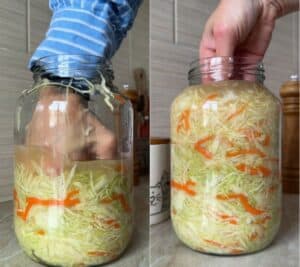
3. Pack tightly and let the brine rise. Begin transferring handfuls of cabbage into a clean 1-liter (1-quart) glass jar. Tuck in the optional bay leaves and black peppercorns as you go. After every few handfuls, press down firmly with your fist or a wooden tamper. As you pack it tightly, natural juices will release and pool upwards. Keep packing and pressing firmly until all cabbage is in. The natural brine must completely cover the top. Golden rule: the cabbage must always stay submerged under its juice!
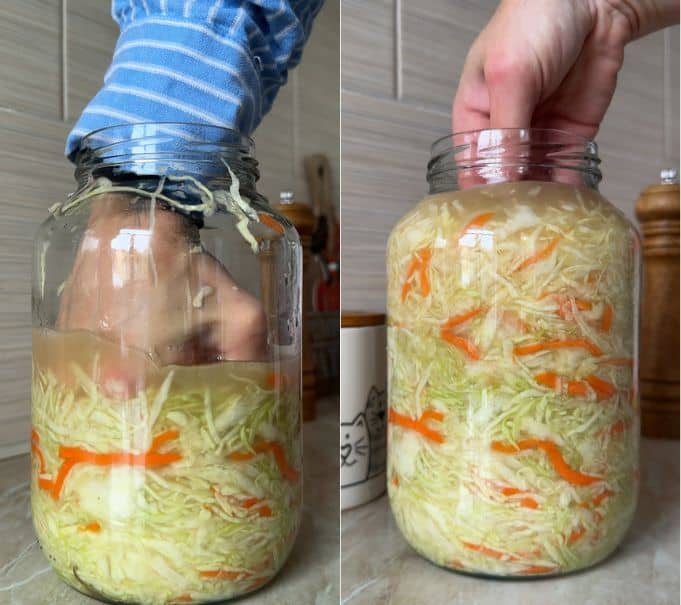
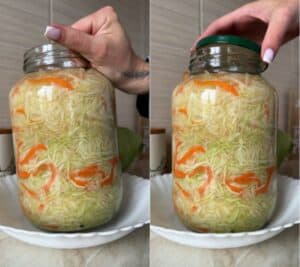
4. Set up for counter fermentation. Place the jar in a small bowl or shallow dish right on your kitchen counter. Keep it out of direct sunlight. This bowl catches any overflow brine as bubbles form. Rest the jar lid loosely on top. Leave a small gap so carbon dioxide can freely escape without building up pressure.
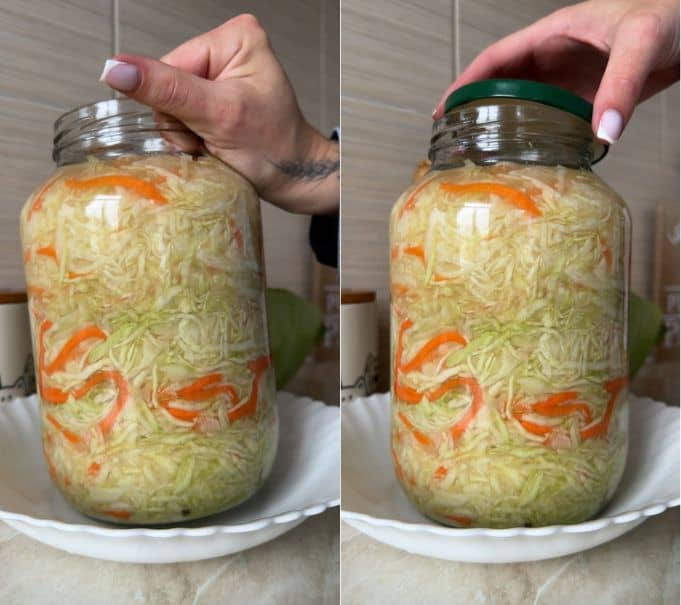
🌡️ Room Temperature Tip:
The ideal fermentation temperature is standard room temperature, around 68°F–72°F (20°C–22°C). At this range, fermentation typically takes 3 to 4 days. However, if your kitchen is cooler (60°F–65°F / 15°C–18°C), the process moves slower. As a result, an extra couple of days actually develops a wonderfully crisp, complex flavor!
5. Pierce and top off with juice.
- Day 1: Leave the jar alone to let the natural wild fermentation kick off.
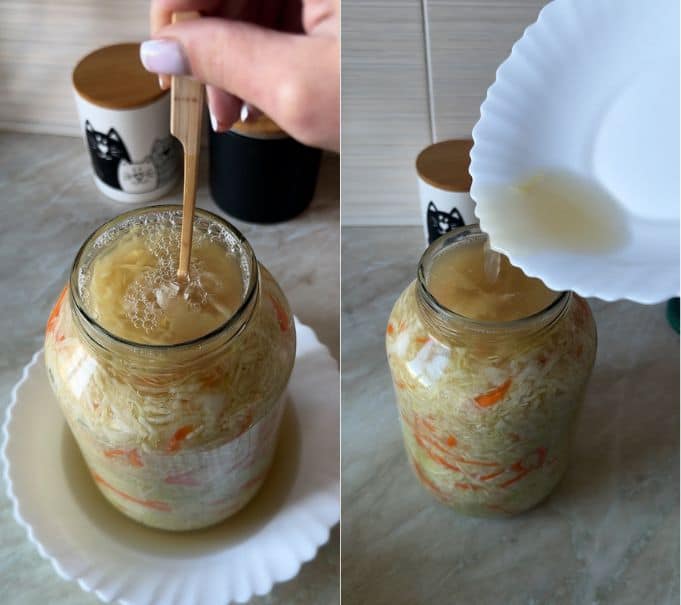
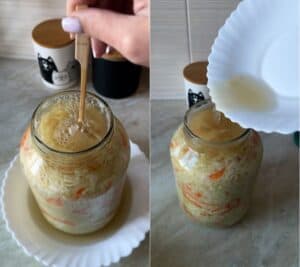
- Day 2: Pierce the cabbage to the bottom using a clean wooden skewer or chopstick. This releases trapped fermentation gases. Never use metal utensils. Press the cabbage back down firmly. It must stay fully submerged. Pour any overflow juice from the plate back into the jar.
- Days 3–4: Repeat this piercing and pressing routine twice a day (morning and evening). Bubbles will rush to the surface each time. This keeps the kraut clean, crisp, and free of bitterness. Always pour collected overflow juice back in. The top layer should never dry out.
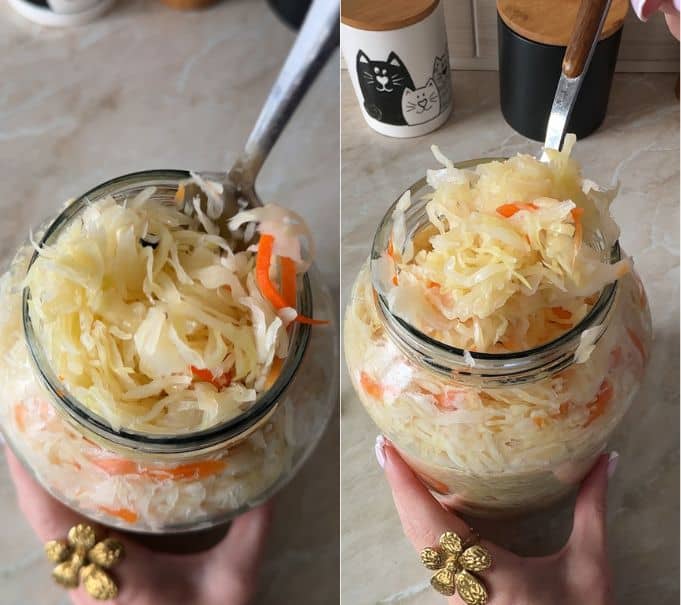
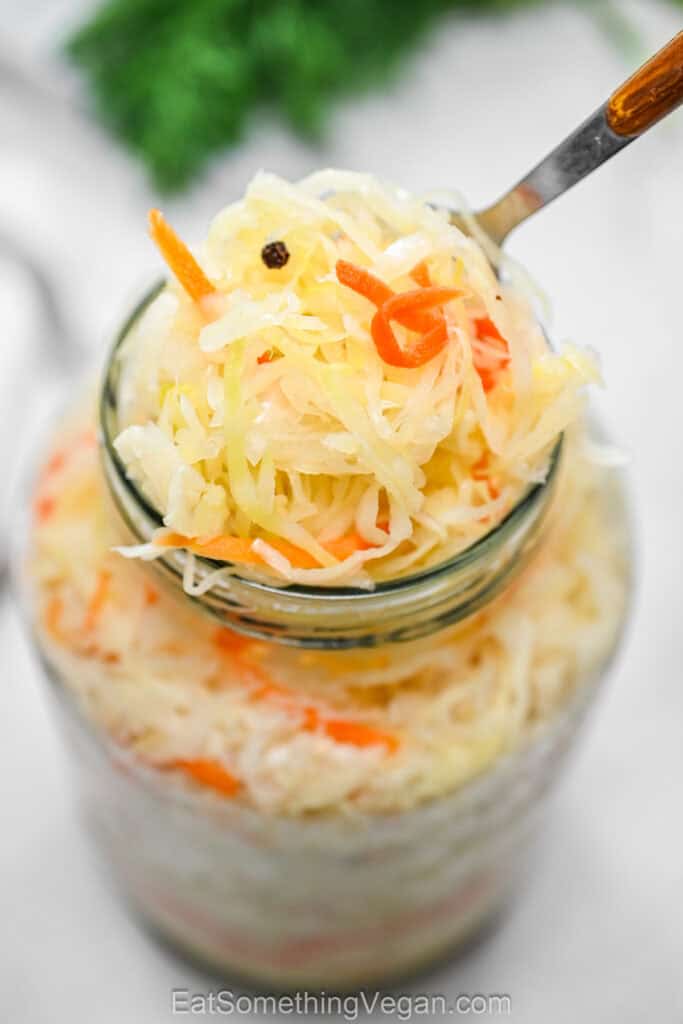
6. Taste and refrigerate. By day 3 or 4, taste a forkful from the top. Once it hits that pleasant, refreshing tang while staying ultra-crisp, screw the lid on tightly. Move the jar to the fridge immediately. The cold temperature pauses active fermentation. It keeps your sauerkraut fresh and crunchy for months!
👩🍳 Expert Tips for the Best Crunchy Homemade Sauerkraut
🥬 Pick late-season, rock-hard cabbage
Avoid loose, fluffy summer varieties or new spring cabbage—they hold too much water and turn limp and watery during fermentation. Look for a dense, heavy head with tight, pale leaves (often labeled as winter or storage cabbage). The denser the raw head, the louder your final crunch.
🧂 Stick strictly to pure, additive-free salt
Standard iodized table salt and salts packed with anti-caking agents will turn your brine murky, introduce off-flavors, and make the cabbage soft. Use only pure, coarse pickling salt or pure non-iodized sea salt to preserve crispness and promote clean fermentation.
🥢 Keep reactive metals far away
Natural lactic acid reacts with metals like iron and aluminum, which can discolor the cabbage and create a bitter, metallic taste. Always use clean hands, a glass jar, and a simple wooden skewer or chopstick to pack down the cabbage and pierce it.
💦 Submerged is safe (brine is your shield)
Oxygen is the enemy of crisp fermentation, while the salty brine is its protective shield. Whenever you pierce the jar to release bubbles, always press the top layer down and pour back the collected overflow liquid so no cabbage stays exposed to dry air.
🥬 Simple, affordable, and deeply nourishing, cabbage is easily one of the most hardworking ingredients you can buy. Cook it right, and it turns wonderfully tender, sweet, and pure comfort food. If you’re ready to fall back in love with this everyday staple, give this quick piece a read.
🥗 The Ultimate Way to Enjoy Crunchy Homemade Sauerkraut
Instead of reinventing the wheel with endless additions inside the fermentation jar, the real magic happens right when you serve it. While you can pile this sauerkraut onto sandwiches or grain bowls, nothing compares to turning it into our timeless, rustic winter salad. It takes two minutes to throw together, yet it completely elevates the meal:
🌿 Simple Salad Add-Ins for Maximum Flavor
🥬 Keep all the tang: Scoop a generous amount of chilled sauerkraut straight from the jar into a shallow bowl. Don't rinse it—you want every bit of that bright, probiotic-rich crunch.
🧅 The onion crunch: Toss in plenty of thinly sliced onion. Mild yellow, red, sweet Vidalia, or fresh green scallions all work beautifully to add a sharp, juicy contrast to the sour cabbage.
🌻 The magic oil: Drizzle everything generously with good oil. Try using unrefined, cold-pressed sunflower oil. It smells like freshly roasted sunflower seeds. It truly takes this simple salad to a whole new level! Good extra virgin olive oil works wonderfully too. However, aromatic sunflower oil paired with cold, tangy cabbage is an unforgettable treat.
🌿 Fresh garden greens: Finish it off with a handful of finely chopped fresh dill or flat-leaf parsley, plus a crack of freshly ground black pepper.
Give it a gentle toss and let it sit for just a couple of minutes so the onion softens slightly in the brine. It is crunchy, fragrant, and shockingly addictive.

🫙 Storage & Make-Ahead
🧊 Storage
In the fridge: Keep the jar tightly sealed in the coldest part of your refrigerator (typically the back of the bottom shelf). Under consistent refrigeration, this homemade sauerkraut stays vibrant, tangy, and remarkably crunchy for 4 to 6 months (often even longer!).
Golden hygiene rule: Always use a clean fork or spoon every time you reach into the jar. Never double-dip or use your fingers, as introducing stray bacteria or oils can spoil the living culture.
Keep it submerged: Before sealing the lid back on, always press down on the remaining cabbage so the natural brine rises back to cover the top. As long as it sits safely submerged in its own juice, oxygen can’t dry it out or soften the texture.
⏳ Make-ahead tip
This is the ultimate prep-ahead champion because, unlike most fresh salads, it actually gets better as it sits. Once fermentation finishes on the counter and the jar is chilled, the flavor smooths out and develops a deeper, richer tang over the first couple of weeks in the cold. It's ready whenever you need a fast, crunchy side dish—just scoop, dress, and serve in under two minutes!
❄️ Can You Freeze Sauerkraut? (Pro Note)
While you can freeze sauerkraut if you plan to cook it into hot stews, soups, or fillings, do not freeze it if you want to enjoy it as a raw, crunchy salad. Freezing ruptures the cell walls of the cabbage and turns that loud, satisfying crunch into a limp, watery mush once thawed. Plus, high cold shocks damage the delicate probiotic community. Stick to the fridge—it lasts for months naturally without freezing!
🍽️ What to Serve With Crunchy Homemade Sauerkraut
Honestly, once you have a jar of this tangy, crunchy kraut in the fridge, you’ll find yourself piling it next to almost everything! Its bright acidity and snappy bite cut through rich, hearty, and savory dishes like an absolute dream. While it’s fantastic alongside classic comfort foods, here are three of my absolute favorite recipes from the blog to pair it with:
- 🥔 Perfect Baked Potatoes This is the ultimate classic pairing. Fluffy, piping-hot baked potatoes with crispy skins love nothing more than a cool, crunchy scoop of sauerkraut tossed with a touch of fragrant oil. The contrast between steaming, tender potatoes and cold, zesty cabbage is pure, soul-warming perfection.
- 🍚 Spinach Rice If you’re craving a lighter, nutrient-dense lunch or dinner, serve a generous mound of kraut next to this vibrant, herby spinach rice. The zesty tang of the fermented cabbage wakes up the earthy greens and fluffy grains, turning a simple bowl into an exciting, flavorful meal.
- 🍝 Mushroom Bolognese Pasta Rich, slow-simmered, umami-packed mushroom Bolognese over al dente pasta is deeply satisfying comfort food. Serving a side of crisp, cold sauerkraut brings that essential punchy freshness that cuts straight through the savory depth of the pasta sauce, cleansing your palate between every bite.
💡 My Tip
Cold air works serious magic on kraut!
As tempting as it is to dive straight into the jar the second you decide it’s ready, resist the urge for just a few hours. Screw the lid on and let that jar get properly, icy-cold in the back of your fridge first. Chilling does something miraculous to the texture—it crisps the cabbage fibers right back up, settles the tangy brine, and turns every single bite into that loud, addictively crisp crunch you’ve been waiting for. A few hours of patience makes all the difference!
❓ Frequently Asked Questions
This usually comes down to the cabbage variety or packing technique. Early summer cabbages have thin cells. Very old heads can also be dry. Always choose dense, late-season white cabbage. Measure your salt accurately using the 2% ratio (20g per 1kg). Finally, pack it firmly into the jar using your fist or a wooden tamper. This tight compaction forces the natural juices to rise and cover the cabbage completely.
Yes! Tiny active bubbles and light white froth are completely normal. They show that healthy lactic acid bacteria are actively working.
A thin, chalky white film on the surface is likely kahm yeast. This wild yeast is harmless and not mold. However, it can dull the flavor over time. Simply skim it off with a clean wooden spoon. Make sure the cabbage remains fully submerged beneath the brine. If you ever spot fuzzy, colored mold (green, black, or pink), discard the batch immediately.
Thanks to natural acidity and salt, this raw sauerkraut keeps remarkably well. It stays crunchy for 4 to 6 months (often even longer) in the refrigerator.
Follow two simple rules to keep it fresh. First, always use a clean utensil when scooping from the jar. Second, make sure the cabbage stays submerged beneath the brine so it never dries out.

📝 Final Thoughts
From the bottom of my Ukrainian heart, I truly, deeply recommend this recipe to you. This is the exact way my grandmother fermented cabbage back home, and being able to share this authentic piece of my kitchen with you means the world to me. I know fermenting can feel a little intimidating at first, but I am so confident that if you follow these simple steps, this will become your absolute go-to recipe—at least, that is my biggest wish! Nothing would make me happier than knowing you have a crunchy, tangy jar of real tradition sitting proudly in your fridge.
If you give this recipe a try, please leave a comment and a ⭐️⭐️⭐️⭐️⭐️ star rating below! Hearing how loud your crunch turned out truly makes my day, and it helps other home cooks discover this honest recipe, too. Happy fermenting!
📄 Scroll down for the full recipe card with step-by-step instructions.
🥬 Have Leftover Cabbage? Make This Showstopper!
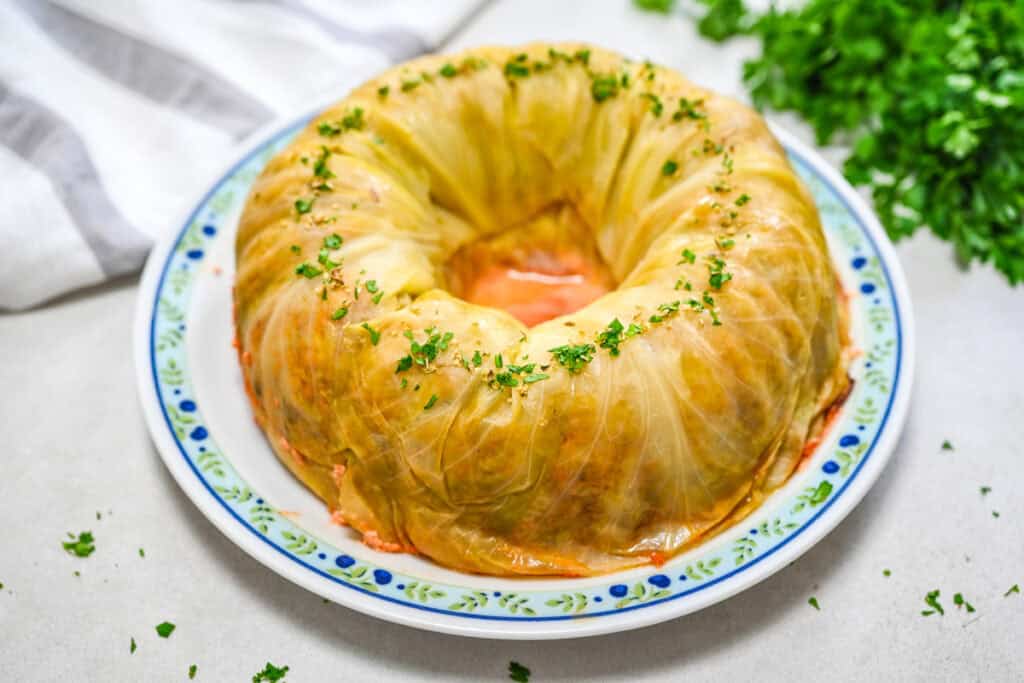
If you bought an extra-large head of cabbage, don't let it sit forgotten. Instead, turn it into this breathtaking Bundt Pan Cabbage Roll Cake! It gives you all the cozy flavors of traditional stuffed cabbage rolls. Best of all, there is zero tedious rolling required. Packed with a savory filling, it bakes in a Bundt pan until tender and saucy. Therefore, it is an effortless crowd-pleaser that looks like a true centerpiece on your table.
Crunchy Homemade Sauerkraut
Video Tutorial
Ingredients
For 1-Quart / 1-Liter Jar:
- 2.2 lbs cabbage, shredded (dense, late-season white cabbage works best) (1 kg)
- 1 medium carrot, peeled and grated (50 g)
- 1 heaping tbsp coarse salt, additive-free non-iodized sea salt or pickling salt; no anti-caking agents (20 g)
- 1 small bay leaf
- 4 whole black peppercorns
Instructions
- Remove and discard all the tough, green outer leaves from the head of cabbage until you reach the clean, tight, pale leaves underneath. Cut the cabbage into quarters, slice out the thick core, and shred the leaves thinly using a sharp chef's knife or mandoline (aim for thin ribbons, but not paper-thin dust so it keeps a firm bite). Shred the carrot using a julienne (Korean-style) grater for sturdy matchsticks, or use a coarse box grater.2.2 lbs cabbage, shredded (dense, late-season white cabbage works best) (1 kg), 1 medium carrot, peeled and grated (50 g)

- Place the shredded cabbage and grated carrot into a large, clean mixing bowl. Sprinkle the 20 grams of non-iodized salt evenly over the top. Using clean hands, toss and gently mix everything together so the salt distributes evenly. Never use metal utensils here—fermentation salts and acids react with metal, so stick strictly to wooden tools or your hands. Do not crush, squeeze, or aggressively knead the cabbage into mush—gentle tossing is plenty to let the salt start working while preserving that snappy texture.1 heaping tbsp coarse salt, additive-free non-iodized sea salt or pickling salt; no anti-caking agents (20 g)
- Begin transferring handfuls of cabbage into a clean 1-liter (1-quart) glass jar, tucking in the optional bay leaves and black peppercorns as you go. After every few handfuls, press down firmly with your fist or a wooden tamper. As you pack it tightly into the jar, the natural juices will begin to release and pool upwards. Keep packing and pressing firmly until all the cabbage is in and natural brine completely covers the top. (Golden rule: the cabbage must always stay submerged under its juice!).1 small bay leaf, 4 whole black peppercorns
- Place the jar in a small bowl or shallow dish right on your kitchen counter out of direct sunlight. This bowl is essential because as the cabbage bubbles and ferments, natural brine will overflow. Rest the jar lid loosely on top, leaving a small gap/crack so the natural carbon dioxide can freely escape without building up pressure.
- 5. Pierce and top off with juice.Day 1: Leave the jar alone to let the natural wild fermentation kick off.Day 2: Pierce the cabbage all the way down to the bottom with a clean wooden skewer or chopstick to release trapped gases—never use a metal spoon or knife. Press it back down firmly with your fingers or a clean wooden tool so it stays fully submerged, and pour any overflow juice from the bottom bowl back into the jar to keep the cabbage completely covered in liquid.Days 3–4: Repeat this piercing and pressing routine with your wooden skewer twice a day (morning and evening). Every time you pierce, you’ll see bubbles rush to the surface, which keeps the kraut clean, sweet, and free of any bitterness. Always pour back the collected overflow juice so the top layer never dries out.
- By day 3 or 4, taste a forkful from the top. Once it hits that pleasant, refreshing tang while staying ultra-crisp, screw the lid on tightly and move the jar to the fridge. The cold temperatures pause active fermentation and keep your sauerkraut fresh and crunchy for months!

Notes
🥗 The Ultimate Way to Enjoy Crunchy Homemade Sauerkraut
Instead of reinventing the wheel with endless additions inside the fermentation jar, the real magic happens right when you serve it. While you can pile this sauerkraut onto sandwiches or grain bowls, nothing compares to turning it into our timeless, rustic winter salad. It takes two minutes to throw together, yet it completely elevates the meal: 🥬 Keep all the tang: Scoop a generous amount of chilled sauerkraut straight from the jar into a shallow bowl. Don't rinse it—you want every bit of that bright, probiotic-rich crunch. 🧅 The onion crunch: Toss in plenty of thinly sliced onion. Mild yellow, red, sweet Vidalia, or fresh green scallions all work beautifully to add a sharp, juicy contrast to the sour cabbage. 🌻 The magic oil: Drizzle everything generously with good oil. If you can get your hands on unrefined, cold-pressed sunflower oil (the deeply aromatic kind that smells like freshly roasted sunflower seeds), buy it immediately—it is literal liquid gold in a bottle and takes this salad to a whole other universe of flavor! Good extra virgin olive oil works wonderfully too, but that nutty, toasted sunflower oil wrapped around the cold, tangy cabbage leaves is an experience you won't forget. 🌿 Fresh garden greens: Finish it off with a handful of finely chopped fresh dill or flat-leaf parsley, plus a crack of freshly ground black pepper. Give it a gentle toss and let it sit for just a couple of minutes so the onion softens slightly in the brine. It is crunchy, fragrant, and shockingly addictive.🫙 Storage & Make-Ahead
🧊 Storage
In the fridge: Keep the jar tightly sealed in the coldest part of your refrigerator (typically the back of the bottom shelf). Under consistent refrigeration, this raw sauerkraut stays vibrant, tangy, and remarkably crunchy for 4 to 6 months (often even longer!). Golden hygiene rule: Always use a clean fork or spoon every time you reach into the jar. Never double-dip or use your fingers, as introducing stray bacteria or oils can spoil the living culture. Keep it submerged: Before sealing the lid back on, always press down on the remaining cabbage so the natural brine rises back to cover the top. As long as it sits safely submerged in its own juice, oxygen can’t dry it out or soften the texture.⏳ Make-ahead tip
This is the ultimate prep-ahead champion because, unlike most fresh salads, it actually gets better as it sits. Once fermentation finishes on the counter and the jar is chilled, the flavor smooths out and develops a deeper, richer tang over the first couple of weeks in the cold. It's ready whenever you need a fast, crunchy side dish—just scoop, dress, and serve in under two minutes!❄️ Can You Freeze Sauerkraut? (Pro Note)
While you can freeze sauerkraut if you plan to cook it into hot stews, soups, or fillings, do not freeze it if you want to enjoy it as a raw, crunchy salad. Freezing ruptures the cell walls of the cabbage and turns that loud, satisfying crunch into a limp, watery mush once thawed. Plus, high cold shocks damage the delicate probiotic community. Stick to the fridge—it lasts for months naturally without freezing!Nutrition
🐾 Life of Emma
I honestly can't decide what's more beautiful here, Emma or my favorite autumn. 🍂❤️ I wait for this season all year, and every time it arrives, I feel like I can never get enough of it. The colorful leaves, the crisp air, the way everything looks a little more magical… I just love it all.
And having my little Emma there to enjoy these moments with me makes it even more special. Although, let's be honest, she's probably just happy to sniff around and doesn't care about the beautiful scenery at all. 😂🐾
I wish days like these could last just a little longer.





Leave a Reply